

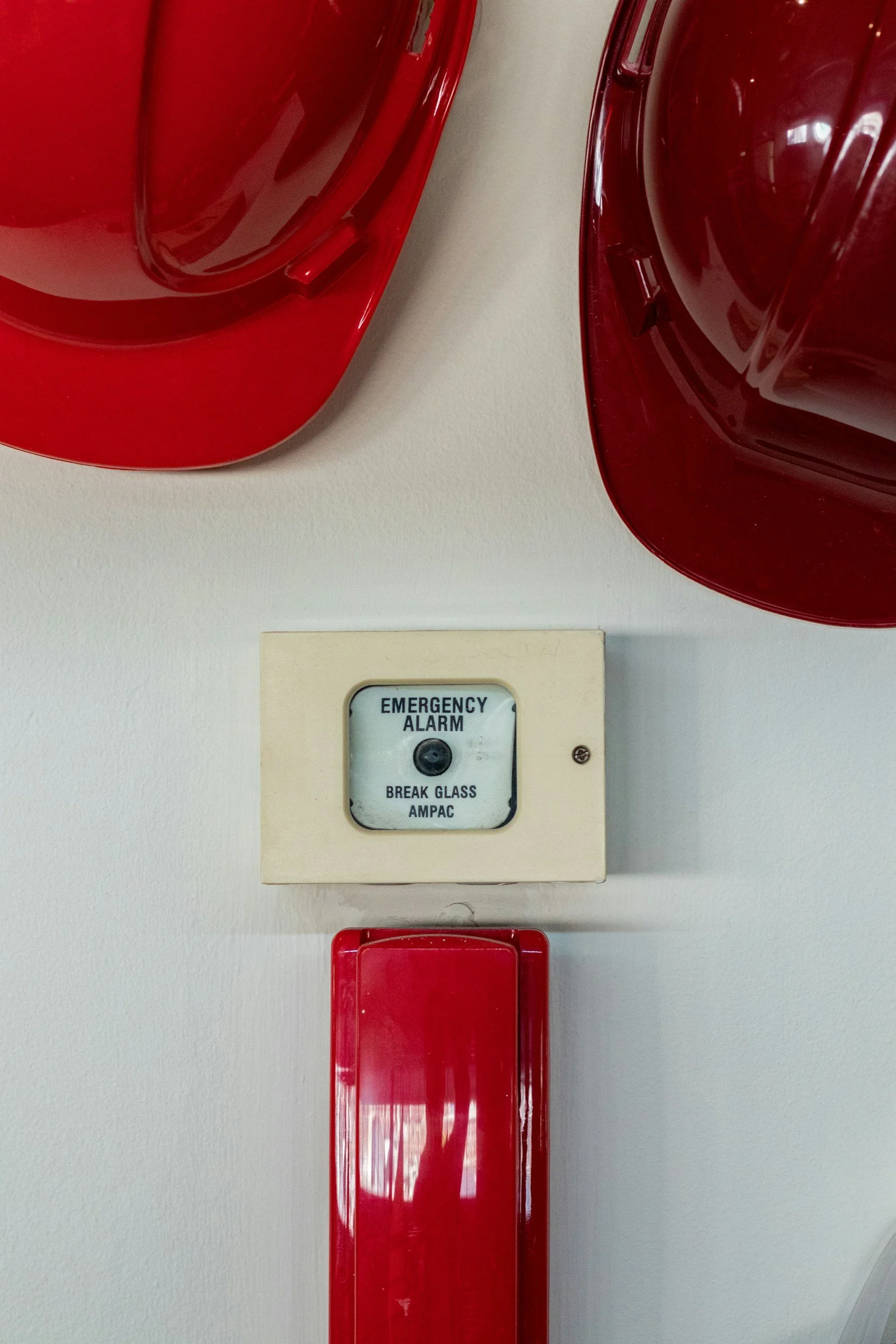
Pain is an alarm.
This is a funky concept, and one that is hard to wrap your head around (my brain certainly did a few summersaults trying to understand this at the start of my career). So, let’s break it down together.
The #1 Thing to Understand: Pain is NOT a measure of tissue health or threat. It is an alarm.
So, let’s use this example:
1. You bend over to pick up the laundry basket
2. Sensors pick up this information and send this info to your spinal cord and brain.
3. Part of the brain is told the message “By the way, you have bent over to pick up a box – what do you want to do about it?”
4. That part of the brain recruits other parts of the brain involved in memory, emotion and knowledge which reminds your brain of “the time you picked up a box, hurt your back and you couldn’t move for weeks”
5. The brain decides based on this past experience that this scenario is VERY bad.
6. So, it sends an amplified pain signal down to the back to warn the body that this could be harmful.
7. You experience pain and your back muscles seize up as a result. You’re in agony. And it was just a laundry basket!
Pain is the alarm system. And in many cases, pain can be a “faulty alarm” or “hyperactive alarm”.
What happens when pain is persistent?
Persistent or chronic pain will cause the nervous system to become sensitized. This means that the alarm (pain) may go off more intensely, faster or last for longer than previous alarm bells.
The hardest challenge in treating Chronic or Persistent Pain conditions?
Convincing the patient (you) that pain is an illusion of the brain. And by illusion, I don’t mean that it isn’t real. Your pain is VERY real.
And then, trying to get our nervous system to function properly over time.
Does Nervous System Dysregulation mean that there is nothing wrong with my tissues?
Not necessarily, but it often means that there is adisproportionate relationship between tissue health and pain. For example, some people with nervous system dysregulation can get debilitating pain from something as minor as a paper cut.
In certain cases of people with nervous system dysregulation have been found to have nothing wrong with their tissues, but may have significant pain.
Okay great I get it, Caz… Now tell me how we can regulate our nervous system!
Things we need to do:
· Acknowledging when we feel pain (not ignoring it completely), describe what the body is feeling, what it feels like (without judgement or attempting to get rid of it)
· Changing how often we think about our pain unnecessarily (rumination)
· Redirect our focus to a “safety signal” e.g. breathwork, massage, somatic movement, hobbies, activity, social connection (can be anything!)
· Showing our body that it is safe to move (in a graded and gradual way)
· Don’t throw away our game plan when we have a flare-up.
At my clinic, the best results I have achieved come from a multi-modal response.
Exercise exposure therapy and root-cause investigation: This is where we use exercises to help adapt our body to different movements without letting our pain alarm dictate our movements.
Root cause investigation is where we take a deep dive into the factors that are driving the pain, this ensures that we are helping develop resilience in our body and preventing future injury
Referral to Georgina Haines Psychology or other Chronic Pain Psychologist: This goes beyond what you may have experienced with psychologists and applies practical application of persistent pain techniques.
If you are struggling with Chronic Pain in Bendigo, reach out for a chat to myself by emailing info@physiowithcaz.com.au
This blog was written by Physio with Caz, based on the current evidence available as of May 2026.
If I haven’t bored you, and you’d like to learn more about pain, I highly recommend the following resources:
TED Talk w Lorimer Moseley – Why Things Hurt https://www.youtube.com/watch?v=gwd-wLdIHjs
Tame the Beast https://www.tamethebeast.org/understanding
Persistent pain explained in 3 minutes https://www.youtube.com/watch?v=jyHeAQbFs34
The Way Out: A Revolutionary, Scientifically Proven Approach to Heal Chronic Pain https://www.penguin.com.au/books/the-way-out-9781473575950 (also available on Spotify as an audio book).
